
Salary Structures

Providing clear and consistent frameworks for success

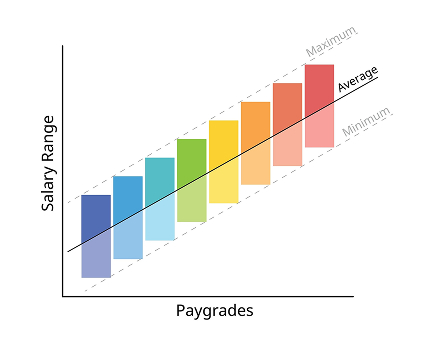
You need salary structures because they provide a clear, consistent framework for pay decisions, helping your organization stay fair, competitive, and financially sustainable. Without them, pay tends to become inconsistent, hard to defend, and risky.
Salary Structures

Providing clear and consistent frameworks for success

You need salary structures because they provide a clear, consistent framework for pay decisions, helping your organization stay fair, competitive, and financially sustainable. Without them, pay tends to become inconsistent, hard to defend, and risky.

  • Define pay ranges for similar levels of work
  • Reduce arbitrary or manager-driven pay decisions
  • Help explain why employees are paid differently
  • This builds trust and reduces pay equity and discrimination risk.
  • Anchoring ranges to market medians
  • Allowing intentional positioning (e.g., 50th vs. 75th percentile)
  • Making it easier to adjust pay as the market moves
  • They prevent both overpaying and underpaying.
  • Know the approved hiring range upfront
  • Avoid ad-hoc offers that break equity
  • Can negotiate confidently within clear limits
  • This speeds up hiring and improves offer acceptance.
  • Show how pay grows with skills, experience, and performance
  • Support promotions and lateral moves
  • Help employees understand career pathways
  • This improves motivation and retention.
  • Plan salary budgets more accurately
  • Avoid pay compression and range creep
  • Make deliberate trade-offs when budgets are tight
  • Compensation becomes strategic, not reactive.
  • Provide a defensible rationale for pay decisions
  • Support equal pay and transparency regulations
  • Simplify audits and leadership reviews

This is increasingly important with pay transparency laws.

  • Clear guardrails
  • Fewer exceptions and escalations
  • Better conversations with employees about pay
  • This leads to more consistent leadership behavior.
  • New roles can be slotted logically
  • Acquisitions and reorganizations are easier to integrate
  • Global or hybrid workforce pay can be managed more effectively
  • Define pay ranges for similar levels of work
  • Reduce arbitrary or manager-driven pay decisions
  • Help explain why employees are paid differently
  • This builds trust and reduces pay equity and discrimination risk.
  • Anchoring ranges to market medians
  • Allowing intentional positioning (e.g., 50th vs. 75th percentile)
  • Making it easier to adjust pay as the market moves
  • They prevent both overpaying and underpaying.
  • Know the approved hiring range upfront
  • Avoid ad-hoc offers that break equity
  • Can negotiate confidently within clear limits
  • This speeds up hiring and improves offer acceptance.
  • Show how pay grows with skills, experience, and performance
  • Support promotions and lateral moves
  • Help employees understand career pathways
  • This improves motivation and retention.
  • Plan salary budgets more accurately
  • Avoid pay compression and range creep
  • Make deliberate trade-offs when budgets are tight
  • Compensation becomes strategic, not reactive.
  • Provide a defensible rationale for pay decisions
  • Support equal pay and transparency regulations
  • Simplify audits and leadership reviews

This is increasingly important with pay transparency laws.

  • Clear guardrails
  • Fewer exceptions and escalations
  • Better conversations with employees about pay
  • This leads to more consistent leadership behavior.
  • New roles can be slotted logically
  • Acquisitions and reorganizations are easier to integrate
  • Global or hybrid workforce pay can be managed more effectively

What Happens Without Salary Structures:

Inconsistent pay for similar work

Pay compression and morale issues

Hard-to-explain pay decisions

Higher turnover and hiring risk

Greater legal exposure

What Happens Without Salary Structures:

Inconsistent pay for similar work

Pay compression and morale issues

Hard-to-explain pay decisions

Higher turnover and hiring risk

Greater legal exposure

In short, salary structures turn compensation from a collection of individual decisions into a coherent system aligned with market, equity, and business strategy.