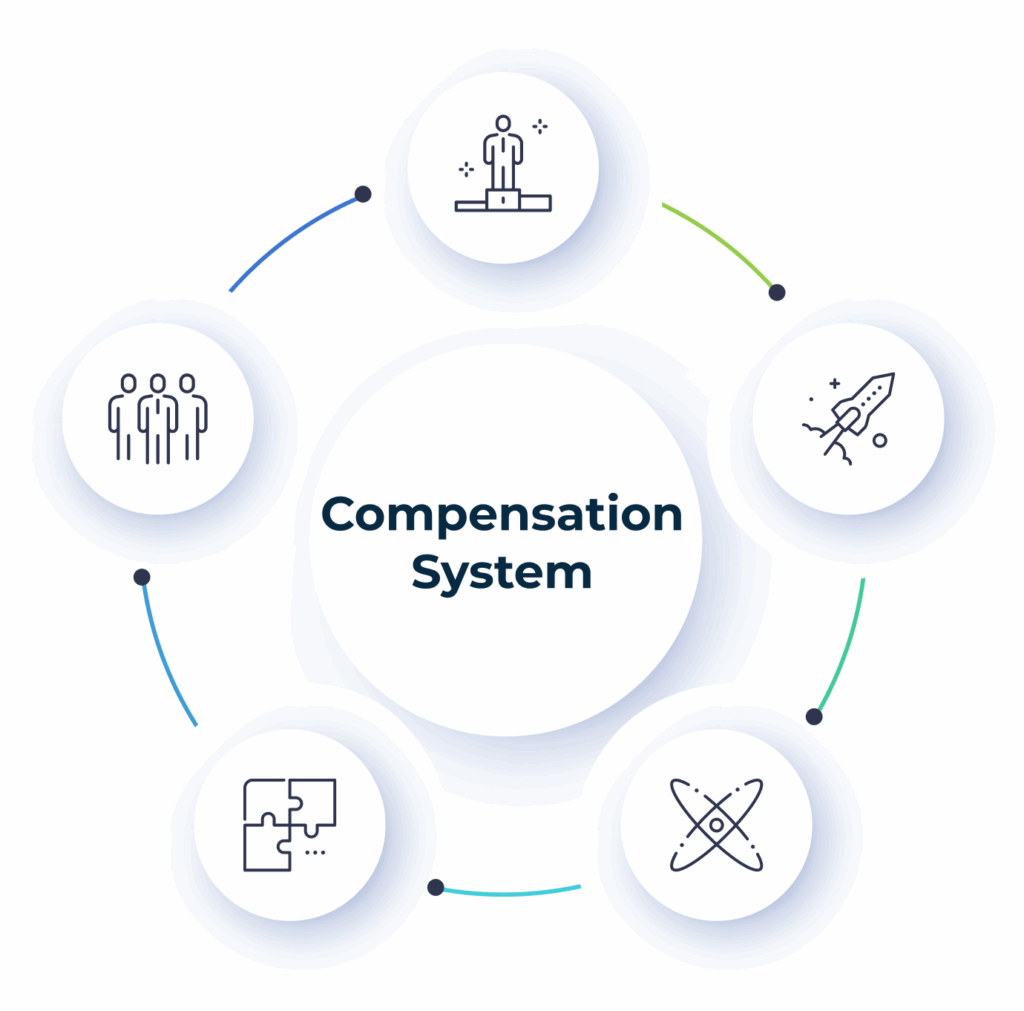
Direct Compensation– This includes pay that employees receive directly in exchange for their labor.
Base Pay– Fixed amount paid, usually hourly, weekly, or monthly.
Incentives or Bonuses– Performance-based pay to motivate or reward achievements.
Commissions – Common in sales roles – pay based on sales generated.
Indirect Compensation– his includes all non-cash benefits that add value for employees. Examples include health insurance, retirement plans, paid time off, employee discounts, and wellness programs.
Purpose of Compensation Systems
Attract qualified candidates
Retain talented employees
Motivate and improve performance
Align employee goals with organizational objectives
Ensure equity and fairness
Types of Compensation Strategies
Market- based:
Pay based on external market rates.
Skill-based or competency-based:
Pay increases with skill development.
Performance- based:
Compensation tied to results or achievements.
Total rewards approach:
Combines monetary, benefits, and developmental rewards.